
Nextoar
Solutions

Nextoar inNav

Complex assembly fails in three ways: the part is missing, the part is misplaced, or the part is misaligned. Every one of them is found later, by an inspector, at many times the cost of catching it at the bench.

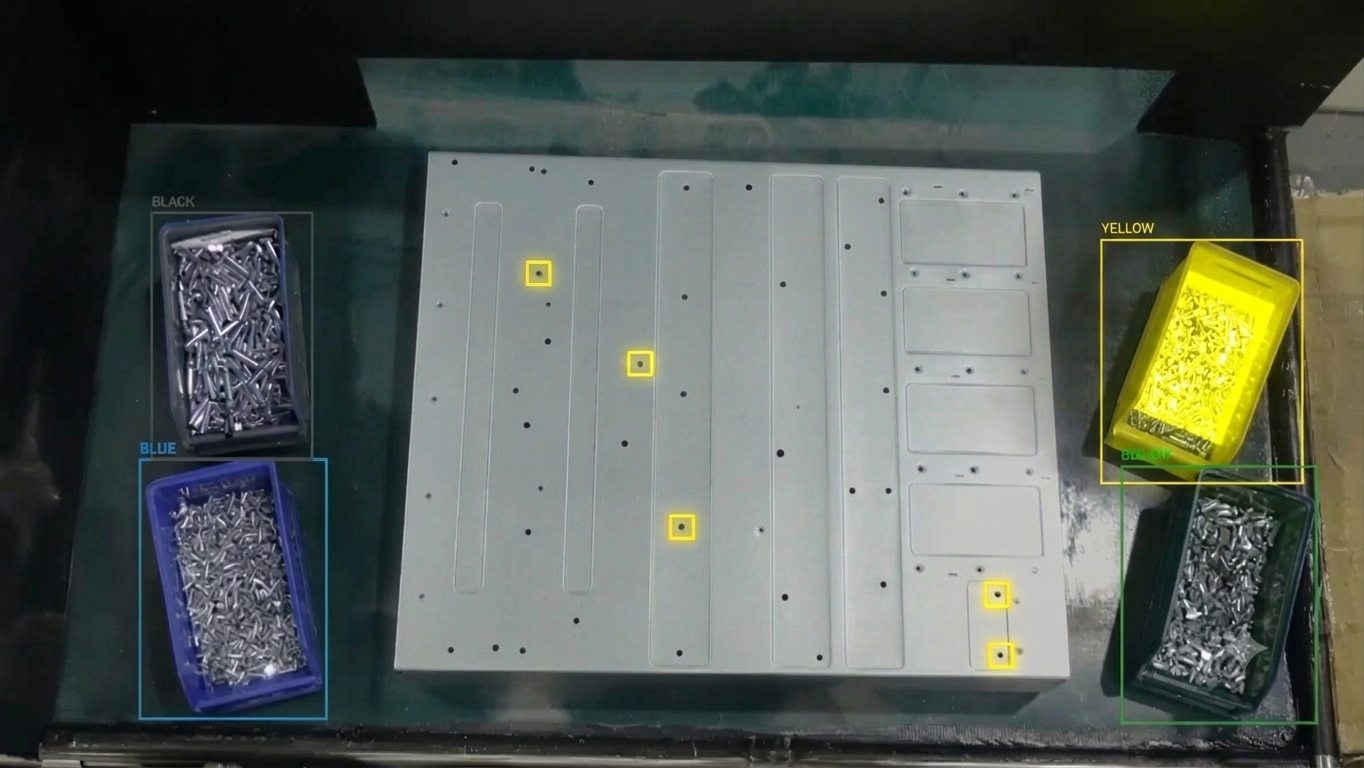
Nextoar inNav is navigation for the assembly itself. It projects light onto the work, points to the correct bin and the correct location one step at a time, and refuses to advance until the step is right.

See the features

Key features

  1. Light on the Work, Not on a Screen

    An operator following a paper traveller or a monitor spends half the task looking away from their hands. inNav puts the instruction on the workpiece: the correct bin lights up, the correct placement location lights up, two points at once so both hands can work. As each part lands, its light goes out and the next step appears. Nothing to read, nothing to remember, nothing to look up.

  2. Poka Yoke at the Moment of Error

    Verification after the fact tells you a defect happened. inNav stops it happening. A wrong bin pick is flagged before the part leaves the operator's hand. A misplacement is shown the instant it occurs, the wrong location marked and the correct hole blinking, and the sequence will not move on until it is corrected. Error proofing becomes part of the method rather than a gate at the end of it.

  3. FOD Control Designed Into the Process

    Loose hardware on a bench is a foreign object waiting to travel. Before each stage change, inNav marks the previous bin for return of leftover hardware, so surplus parts go back where they came from and bins do not get mixed. In aerospace, defence and precision assembly, this turns FOD from something you inspect for into something the process prevents.

  4. Faster Ramp Up, Fewer Inspection Stages

    A guided sequence that cannot be completed incorrectly changes who can do the job and how quickly. New operators reach standard output in a fraction of the usual time, experienced operators stop carrying the whole sequence in their heads, and fatigue driven error late in a shift falls away. Because verification is built into every step, the separate inspection stage that used to catch these defects has nothing left to find.

  5. Evidence for Every Build

    Each step produces a record: what was picked, where it was placed, when, and whether it needed correction. That becomes a per unit build history you can hand to a customer or an auditor without assembling it after the fact. For controlled BOM work, the audit trail is often worth more than the cycle time saved.

Ready to transform your operations?

Book a personalized demo with our team and see Nextoar in action.